

■ The city brings together more than 300 representatives from 16 countries to promote the role of medium-sized cities in time policies.
■ The forum marks one of the key moments of the 2026 Capital status and positions Sant Boi as a global benchmark in work–life balance, care and everyday wellbeing.
■ The meeting provides a framework for incorporating new institutions into the Local and Regional Network for Time Policies, expanding its member cities across Catalonia, Europe and Latin America.
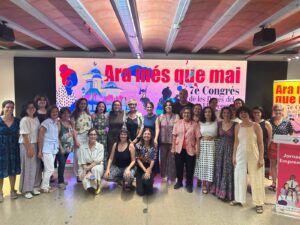
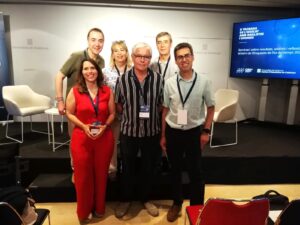
On 9 June, Sant Boi de Llobregat held the central event of its World Capital of Time Policies 2026 with the Forum of Medium-Sized Municipalities for the Right to Time, an international gathering that placed the city at the centre of the global debate on time organisation and quality of life. It brought together more than 300 participants, including elected municipal representatives, technical staff and experts from 16 countries in Europe and Latin America, both in person and online.
A global space to rethink time policies in medium-sized cities
The forum was conceived as a space for exchange and reflection on the strategic role of medium-sized municipalities in transforming public policies linked to time use, enabling the sharing of replicable experiences and fostering partnerships between territories. Within this framework, a key idea was reinforced: time is not only an individual matter but a collective challenge that requires coordinated institutional responses.
During the day, several of the major shared challenges currently facing cities were addressed:
- achieving a balance between work, personal and family life
- the unequal distribution of care time, disproportionately borne by women
- the need to reorganise public services to adapt them to people’s daily rhythms
- the impact of time use on health and everyday wellbeing
- the transformation of urban models towards more local, sustainable and accessible environments, aligned with concepts such as the ‘15-minute city’
The participation of international organisations such as the World Bank, UN Women, UCLG, CIDEU and the Global Alliance for Care reinforced the global dimension of the meeting. These discussions strengthened the consensus that guaranteeing the right to time is key to reducing inequalities, improving quality of life and building fairer, more cohesive societies.
Expansion of the Network and international commitment
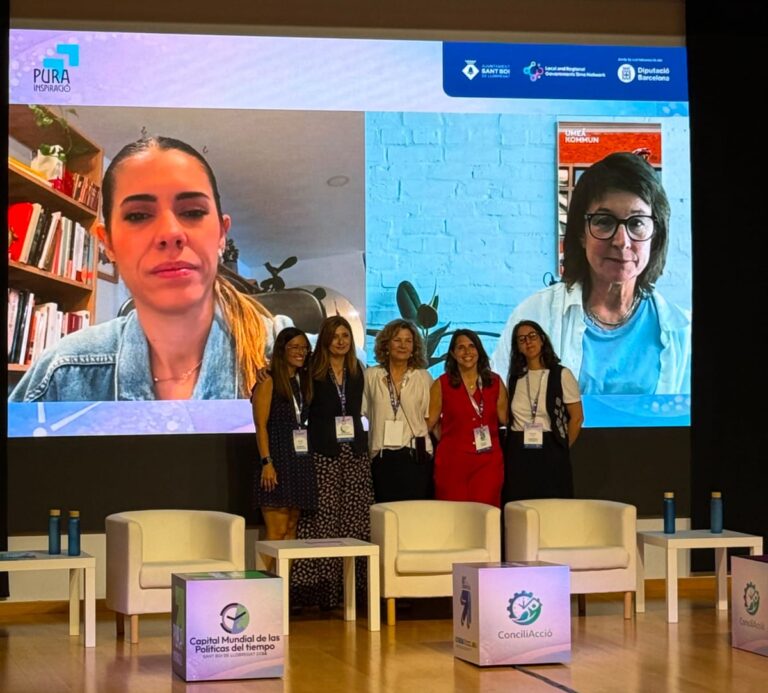
One of the forum’s most significant outcomes has been the expansion of the Local and Regional Network for Time Policies, strengthening its role as a space for international cooperation. In this context, new institutions have joined: in Catalonia, El Prat de Llobregat and Sant Adrià de Besòs; in Latin America, the Colombian city of Medellín; and in Europe, the Swedish city of Umeå.
This growth was formalised within the framework of the presentation of the Sant Boi de Llobregat Commitment, a declaration that reinforces a shared vision to rethink time organisation in order to improve wellbeing, promote equality and build more sustainable territories.
With more than 50 member institutions and an impact reaching over 90 million people, the network is consolidating its position as a global driver of innovation in time policies, with Sant Boi playing a key role in this new stage of expansion.
Sant Boi paves the way for medium-sized cities
The forum highlights that the 2026 Capital status is not merely symbolic recognition but an opportunity to accelerate the transformation of public policies.
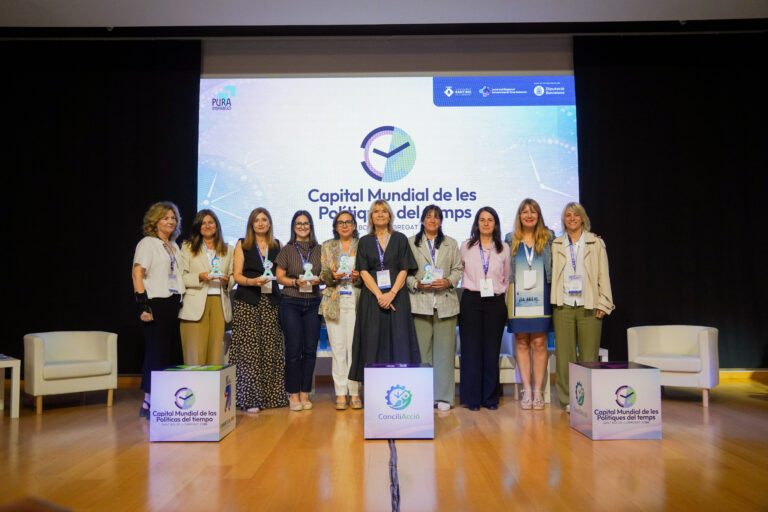
The forum also served to strengthen the ConciliAcció project, a pioneering initiative promoting collaboration between public administrations and businesses to improve working time management. During the event, five municipalities in Baix Llobregat — Gavà, Esplugues de Llobregat, Sant Joan Despí, El Prat de Llobregat and Viladecans — were recognised as “ConciliAcció Cities”, expanding a network committed to work–life balance, workplace wellbeing and business competitiveness.
Sant Boi is thus positioning itself as a laboratory for innovation capable of generating models applicable to other municipalities, especially medium-sized ones, which face similar challenges and have fewer resources than major capitals.
The Mayor of Sant Boi, Lluïsa Moret, underlined this leadership role: “From Sant Boi today we are opening a path for thousands of intermediate cities that need models to move towards more equitable time use. Time is a fundamental right of citizens that governments must guarantee.” Moret also emphasised that “time has a gender dimension”, highlighting that inequalities in the distribution of time use continue to negatively affect women.
The event also featured institutional participation from Alba Barnusell, Deputy President of the Social Sustainability Area of the Barcelona Provincial Council, and Sònia Guerra, Secretary General for Equality and Feminism of the Government of Catalonia, both of whom stressed the need for cross-cutting policies to ensure a more equitable use of time.
The World Capital of Time Policies
The Capital status is a recognition awarded by the Local and Regional Network for Time Policies, confirming the growing international interest in placing the right to time at the centre of public policies.
Sant Boi is the first medium-sized city to hold this title, following Barcelona (2022), Bolzano (2023), Strasbourg (2024) and Bogotá (2025). This distinction recognises a pioneering trajectory that began in 2011 with the Time Pact and has been reinforced through innovative projects such as ConciliAcció, aimed at transforming time organisation in the business sphere.