

The Time Use Initiative took part on 14 May 2026 in a session of the Master’s Degree in Social Policy, Work and Welfare at the Autonomous University of Barcelona (UAB), dedicated to exploring the relationship between time, inequalities and public action. The session provided an opportunity to introduce students to the main social challenges associated with time use and the recognition of time as a citizenship right.
The UAB Master’s programme is a leading academic programme in the analysis of social and welfare policies, aimed particularly at individuals interested in current social issues, gender inequalities, the challenges of immigration, cultural, ethnic and religious diversity, and the role of labour and education policies within the European context. In this framework, the participation of TUI contributed to incorporating the time perspective into the training of future professionals in social policy, work and welfare. The session highlighted that time is not merely an individual matter or an issue of personal organisation, but rather a social resource distributed unequally and closely linked to health, equality, inclusion, productivity and sustainability.
One of the central themes of the session was the concept of time poverty, which affects people differently depending on factors such as gender, social class, age or background, as well as time policies as a new type of public policy that goes beyond working hours or work organisation. Incorporating the time perspective means analysing the impact that public policies have on people’s daily lives and how they can contribute to reducing inequalities.
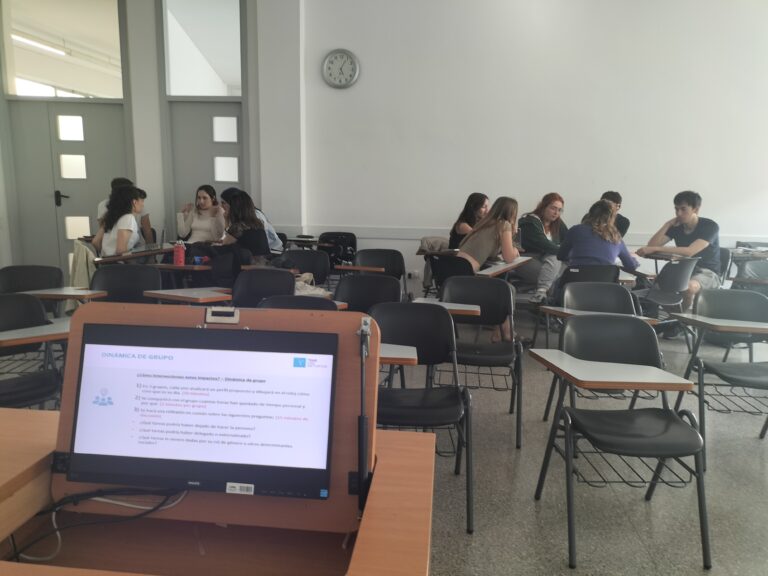
To encourage applied reflection, the session included group exercises in which students analysed different social profiles and identified how temporal inequalities shape everyday life. The groups then proposed public policies aimed at reducing time poverty, linking academic analysis with potential institutional responses. Among the measures discussed during the session were labour legislation, care leave arrangements, local mobility policies, childcare services, the digitalisation of public services, the 15-minute city approach, and the adaptation of facility opening hours and participatory processes to citizens’ time-related needs.
Through its participation in the UAB Master’s programme, TUI reinforces its commitment to education, awareness-raising and knowledge generation around the right to time. Promoting a critical understanding of time use among new generations of professionals is essential to advancing towards healthier, more equal and sustainable societies, in which everyone has access to their own time and can participate fully in social, community and democratic life.