

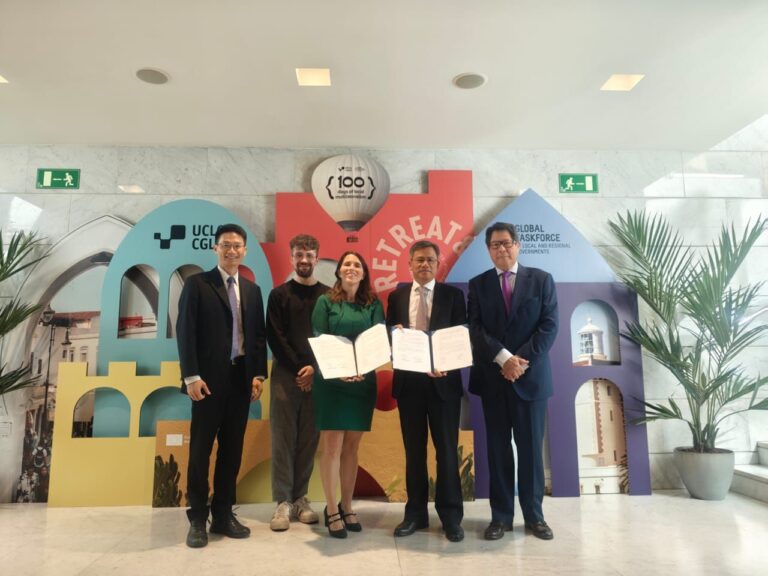
Time policies continue to gain global momentum with their expansion into Asia, following a new cooperation agreement signed on 26 February 2026 between the Time Use Initiative (TUI) and the Guangzhou Institute for Urban Innovation (GIUI). The partnership marks a step forward in bringing time-use perspectives into new regional contexts and strengthening their presence in global urban agendas.
The agreement reflects a growing international recognition of time as a key factor in shaping more sustainable, inclusive, and people-centred cities. By extending the reach of time policies into Asia, this collaboration contributes to advancing discussions on well-being, equality, productivity, and social cohesion, reinforcing the importance of how societies organise and distribute time. Within this framework, both organisations will promote knowledge exchange, international networking, and the dissemination of innovative practices, particularly through global platforms such as the Guangzhou International Award for Urban Innovation. The collaboration will help highlight initiatives that integrate time-use considerations, while fostering shared learning among cities and institutions.
For TUI, this partnership represents its first formal alliance in Asia and an opportunity to expand its mission of advancing the right to time worldwide. Through this collaboration, TUI will contribute its expertise and global network to situate time policies more firmly within international urban innovation debates. The agreement underscores the growing relevance of time policies as a transformative tool for public policy. As they gain ground in new regions, their expansion signals a broader shift towards more balanced and equitable models of time use, essential for building healthier, fairer, and more sustainable societies worldwide.