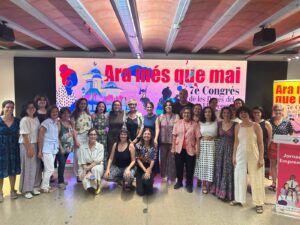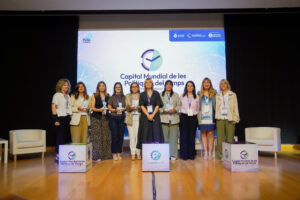


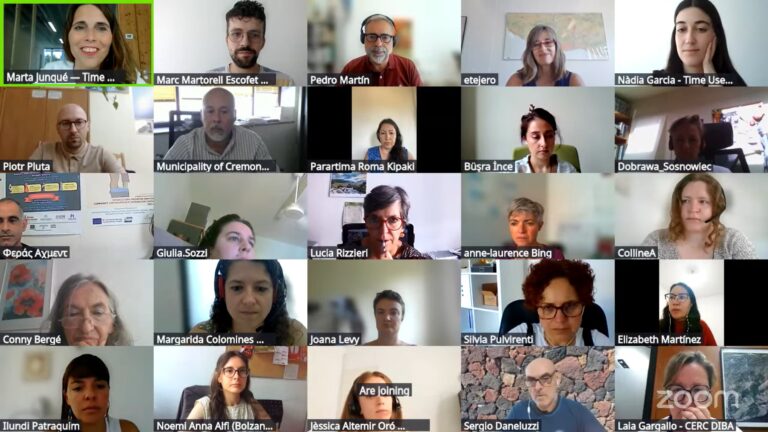
From 30 June to 3 July, the Time Academy was held, the first international training dedicated to time policies. The event brought together more than 300 people from 36 countries: professionals from local and regional governments and other fields involved in the design and implementation of public policies.
The Academy has provided participants with theoretical and practical knowledge to incorporate the perspective of time into institutional governance. The programme featured experts with a recognised track record in time management and best practice examples from across Europe.
The training was structured into four thematic sessions, each focusing on a key phase of time policy development:
- Diagnosis: the opening session provided participants with a comprehensive methodology to identify existing time policies within their institutions, drawing on the experience of the Barcelona Metropolitan Area.
- Evaluation: the second session focused on how municipalities can develop data-driven evaluation systems to measure the impact of implemented time policies, through the presentation of methodologies and case studies developed in Barcelona and Bolzano.
- Design: the third session explored mechanisms and strategies for maintaining political commitment to temporal governance reforms, while working to overcome institutional divisions. The experiences of the Government of Catalonia and the Provincial Deputation of Barcelona were shared.
- Time and sustainability: the fourth session has focused on designing time policies aimed at tackling a specific challenge, the climate crisis, showcasing innovative examples from Rennes and Milan that integrate time management into urban sustainability strategies.
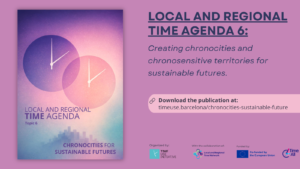
As a result of the knowledge shared during the Time Academy, the Time Policies Toolkit has been developed: a practical guide for public institutions to facilitate the recognition, evaluation and implementation of time policies that place the management of time at the centre of public service and urban development.
The training has been organised by the Local and Regional Time Network and promoted by the European project Time4All 2.0, reinforcing the European commitment to a more sustainable, equitable governance model that is mindful of time as an essential collective resource. The materials have been translated into Catalan thanks to the support of the Department for Foreign Action and the European Union of the Government of Catalonia.